
Family Business Succession Planning for Automotive Business Owners

Joe J. Thissen
President - AutoCenter Sales
Every owner who built a shop with their own hands has pictured the day they hand the keys to a son, a daughter, or a nephew who grew up sweeping the bays. It is a great picture. It is also one of the hardest things in business to actually pull off.
The numbers have not changed much in decades. Roughly a third of family businesses make it through the second generation, and only about one in ten survive into the third. Those figures apply to businesses that stay under family ownership and control, which is exactly what most owners are hoping for.
At AutoCenter Sales, we have spent 35 years working with automotive business owners across the country and have been involved in the sale of more than 2,000 locations. We have watched family handoffs work beautifully. We have also watched a lot of them fall apart, and we have helped plenty of owners sell a business they always assumed would stay in the family. The difference between the two outcomes almost never comes down to luck. It comes down to whether the owner planned for it.
The families who make it start early
The common thread among family businesses that survive a transition is simple to say and hard to do: they treat succession as a multi year project, not a conversation at the kitchen table when Dad is ready to retire.
Most owners believe they have a plan. In Deloitte’s 2026 global survey of family businesses, more than 80 percent said they had one, but fewer than half described it as well developed. The most common obstacle they named was a next generation that was not yet ready. That matches what we see in the automotive world. The kid knows the trade. What he does not know yet is the business.
Here is what the successful families do differently.
They find out what the business is really worth before anyone shakes hands
This surprises people. Why would you need a valuation if you are not selling to a stranger?
Because a family transfer is still a transfer of something valuable, and everyone involved is going to have an opinion about what that value is. The child who is taking over the shop, the siblings who are not, the spouse who is counting on the business to fund retirement, and the accountant and attorney who have to structure it all need to be working from the same number. We have seen more family transitions poisoned by an argument over value than by anything else.
Getting a real, defensible number is the foundation of every good succession plan, and it is one of the things we do for automotive business owners every week. It simply tells you what you actually have to work with.
They train the successor on the business, not just the trade
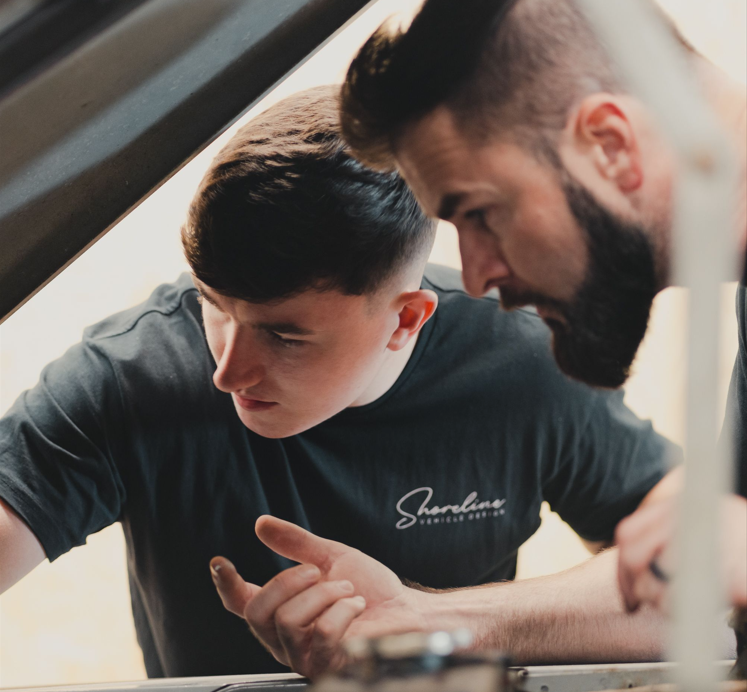
A great technician is not automatically a great owner. The families who make it put the next generation through the parts of the business that are invisible from the shop floor: reading the financials, managing the relationship with the landlord and the bank, negotiating with vendors, hiring and firing, and understanding what actually drives profit in the shop. They do this over years, while the current owner is still there to catch the mistakes.
There is a side benefit to this. Somewhere along the way, it becomes obvious whether the successor is ready, and just as importantly, whether they even want the job.
They take the emotion out of picking the successor
Working with family is tricky, and choosing between family members is trickier. A decision made on emotion, the oldest son over the more capable niece, for instance, can cost you the business and the relationship both.
A real succession process gives you an honest, observable basis for the decision. Sometimes that process reveals that the right person to run the shop is not a family member at all. That is not a failure. More family businesses are bringing in non family managers than ever before, and there are structures that let the family keep the ownership and the income while someone else runs the day to day.
They put a timeline on it
Transitions take longer than owners expect, and in today’s market everything about a deal takes longer than it did a few years ago. Financing, legal work, and any lease or franchise approvals all run on extended timelines now. If you have an age in mind for stepping back, work backward from it and start earlier than feels necessary. The owners who wait until health, burnout, or a bad year forces the issue end up with fewer options and a weaker hand.
They have a Plan B, because the next generation often says no
This is the part the old advice never talks about. A large share of the family transitions we are asked to help with end with a sale instead, and not because the plan failed. The son went to college and built a different career. The daughter loves the family but not the 6 a.m. (or 6 p.m.) calls. The kids want the money more than the business.
If that turns out to be your situation, you are in a far better position than you might think. A well run automotive business with clean books is in demand right now, from individual operators, from other shop owners looking to add a location, and from consolidators and investor backed groups actively buying independent shops across the country. The selling process is confidential from start to finish, so your customers, employees, and competitors learn about it on your timeline. And a business that has been through real succession planning, with a valuation, clean financials, and a successor trained on the operation, is exactly the kind of business buyers pay a premium for. Nothing you did to prepare for a family handoff is wasted if you end up selling instead.
If you want to see what a well run sale looks like, we wrote about the mistakes to avoid when selling your automotive business in a recent post.
Where AutoCenter Sales fits in
Whether your business ends up with your kids, with a key employee, or with an outside buyer, the work at the front end is the same: an honest valuation, clean and defensible financials, and a plan with a realistic timeline. For 35 years, AutoCenter Sales has helped owners of repair shops, tire stores, collision centers, car washes, and other automotive businesses through every one of those outcomes, and our clients will tell you we handle the hard conversations so the family does not have to.
If you are thinking about the future of your automotive business, the best time to talk is years before you need to. Call us at 800-874-5793 or reach out through our contact page.
Frequently Asked Questions
Should I give the business to my kids or sell it to them? There are several ways to structure a family transfer, and the right one depends on your retirement needs, your other children, taxes, and whether the successor can finance a purchase. What every option has in common is that it starts with knowing what the business is worth. We help owners understand the choices before they commit to one.
How early should succession planning start? Years earlier than most owners think. Training a successor on the full business takes time, and today’s extended deal timelines mean even the paperwork side moves slowly. If you have a target date for stepping back, the planning should already be underway.
What if my children do not want the business? It happens more often than not, and it is not a failure. A well run shop with clean financials is in strong demand from individual buyers and consolidators alike, and the preparation you did for a family transition makes the business more valuable to an outside buyer. We can walk you through a confidential sale whenever you are ready.
Do I need a valuation to pass the business to family? Yes, and it may be the single most important step. A defensible valuation keeps the transfer fair to everyone in the family, gives your advisors a solid number to work from, and prevents the disagreements that derail so many family transitions.